

Small businesses do not usually lose time because of one big problem.
They lose time through hundreds of small manual tasks: replying to leads, updating spreadsheets, scheduling meetings, sending follow-ups, checking forms, creating reports, managing customer questions, and moving information from one tool to another.
None of these tasks feel huge on their own. But together, they quietly take hours every week.
For many small business owners, this is the real cost: not only the money spent on tools, employees, or software, but the time lost managing repetitive work that could be automated.
AI is no longer only for large companies with big budgets and technical teams. Today, small businesses already use tools like email, websites, calendars, CRMs, spreadsheets, payment platforms, and chat systems. The problem is that these tools often do not work together.
A lead comes through the website. Someone checks the form. Then they reply manually. Then they add the lead to a spreadsheet or CRM. Then they schedule a call. Then they send a reminder. Then they follow up again.
This is where AI automation becomes useful.
AI automation means using AI and connected tools to reduce repetitive manual work. It does not mean replacing your business. It does not mean removing the human touch. It means designing smarter workflows so your team can move faster and focus on the work that actually grows the business.
A good AI automation strategy starts with one simple question:
What work is your team repeating every week that could be handled faster, better, or more consistently?
For example, a website lead can automatically be captured, organized, qualified, and routed to the right person. A follow-up email can be drafted or sent. A meeting can be scheduled. The CRM can be updated. A weekly report can be generated. Your team can be notified when something important happens.
This is not about using AI for everything. It is about using AI in the right places.
AI automation is not about replacing people. It is about removing repetitive work so small teams can spend more time serving customers, making decisions, and growing the business.
Most small businesses lose time in four areas: lead follow-up, scheduling, customer support, and reporting.
Lead follow-up is one of the biggest opportunities. Many businesses spend money to get website visitors, referrals, ads, or social traffic. But when someone fills out a form or asks a question, the response is often manual and slow. That delay can cost real money.
AI automation can help capture leads, organize them, send quick replies, and make sure no opportunity gets missed.
Scheduling and communication are another major time drain. Back-and-forth messages, reminders, confirmations, status updates, and follow-ups can take hours every month. AI can help reduce this busywork by connecting calendars, email, forms, and customer information into a smoother process.
Customer support is also a strong starting point. Many customer questions are repeated again and again: business hours, pricing, service details, booking steps, order status, required documents, and next actions. AI support systems can answer common questions, route complex issues to the right person, and reduce pressure on small teams.
Reporting and admin work are often hidden costs. Many business owners still rely on manual reports, spreadsheets, and scattered updates to understand what is happening. AI can help collect information from different tools and turn it into simple reports: leads received, response time, customer questions, sales activity, missed opportunities, and next actions.
This saves money by reducing the amount of time your team spends on repetitive work. But the bigger value is better execution.
When systems are connected, businesses can respond to customers faster, reduce missed leads, avoid duplicate work, reduce human error, improve the customer experience, delay unnecessary hiring, and make better decisions from cleaner data.
For a small business, saving 5 to 10 hours per week can be meaningful. Saving 20 to 40 hours per month can change how the business operates.
The mistake many businesses make is starting with the question: “What AI tool should I use?”
The better question is: “What workflow should we improve first?”
Buying another AI tool will not solve the problem if your process is unclear. You may end up with more software, more confusion, and more disconnected systems.
At BraidNest, we believe the best approach is to start small. Choose one workflow. Understand how it works today. Identify the manual steps. Then design a simple automation around it.
Start with one clear outcome: faster lead response, less admin work, better scheduling, cleaner CRM data, faster reporting, or better customer support.
Once one workflow works, you can expand.

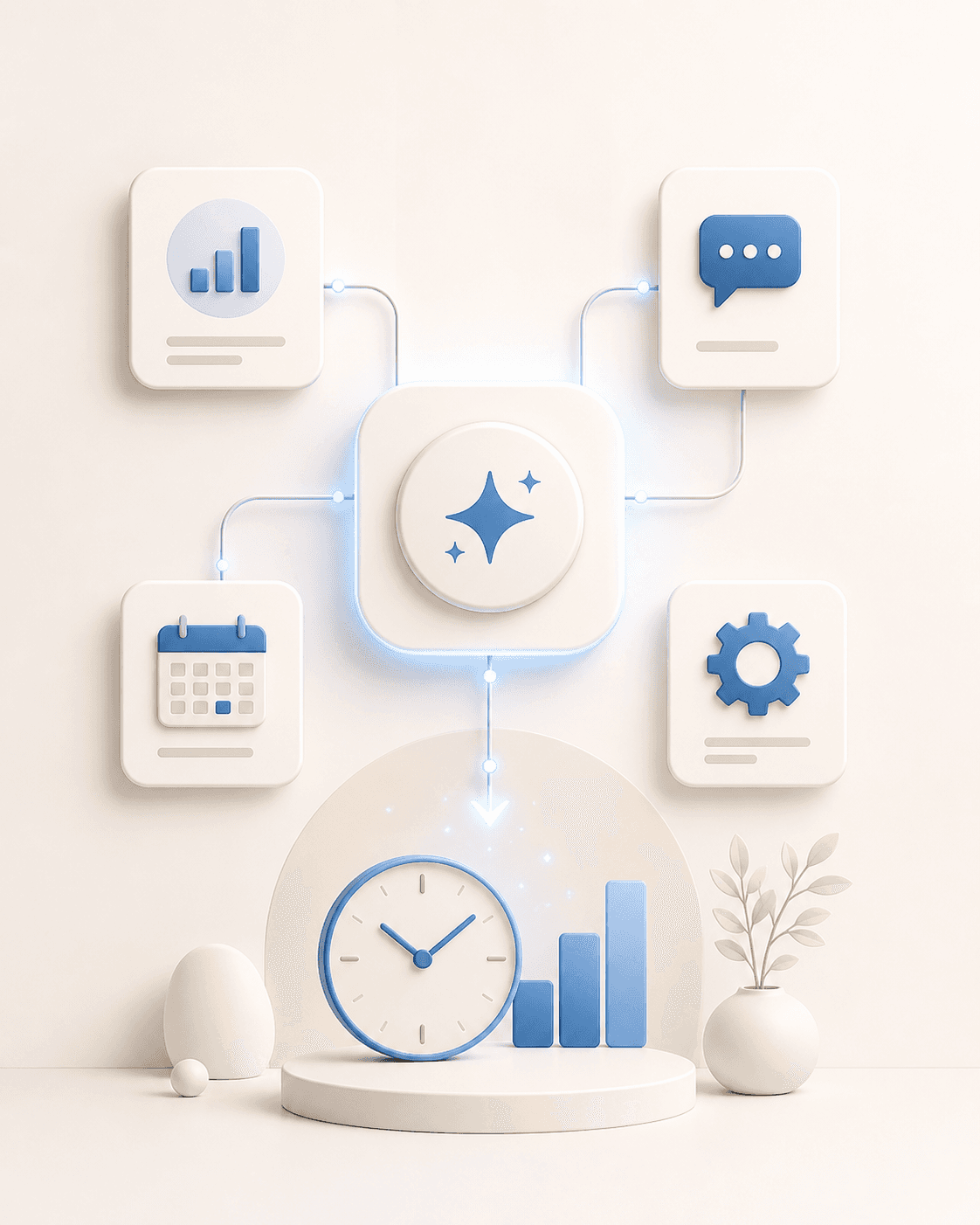
AI automation should not feel like a science project.
For small businesses, it should feel practical: fewer repetitive tasks, faster replies, better organization, less manual copying and pasting, clearer reporting, more time for customers, and more time for growth.
BraidNest is a venture studio and digital product partner based in the Bay Area. We help founders and small businesses design modern websites, build digital products, and integrate AI automation into everyday workflows.
Our approach is simple: identify the workflow, design the system, connect the tools, launch, and improve.
The goal is not to make AI sound impressive. The goal is to make your business easier to run.
If you are a small business owner, you do not need to automate everything at once. Start with one workflow that happens every week and takes too much time.
Ask yourself: what do we keep doing manually that slows us down?
That answer is usually the best place to start. At BraidNest, we help businesses turn those repeated tasks into smarter systems so teams can save time, reduce costs, and focus on the work that actually grows the business.